
ChatGPT’s Ad Pilot Just Hit $100M: Why April Matters for B2B

For the last decade, the playbook for Western market entry was predictable: build a website, invest in SEO, and run Google Ads. However, the foundational layers of how B2B buyers find information are shifting.
In late March 2026, reports emerged that OpenAI’s ChatGPT ad pilot reached a staggering $100 million inised revenue run rate in just six weeks. What makes this figure remarkable is not just the speed of growth, but the context: this revenue was generated with less than 20% of eligible users actually seeing ads.
As we move through April, OpenAI is set to launch self-serve advertising access. This transition from a closed, managed pilot to an open platform represents a critical inflection point for B2B marketing leaders. It is no longer a question of "if" AI-driven search will impact your pipeline, but "how" you will adapt your strategy before the cost of entry skyrockets.
The Milestone: Efficiency Over Volume
According to data shared by Search Engine Land, OpenAI’s ad platform is scaling at a pace that rivals the early days of Meta and Google. With over 600 advertisers currently in the managed pilot, the platform has proven that it can deliver high-relevance content; fewer than 7% of ads were rated by users as "low relevance."
The April launch of self-serve access is the catalyst that will move ChatGPT from an experimental channel for Fortune 500 brands to a viable tool for mid-market and scaling B2B enterprises. By removing the friction of manual onboarding and managed account requirements, OpenAI is effectively opening the floodgates to the broader advertiser market.
For companies that have struggled to find a foothold in the increasingly crowded and expensive Google Search environment, this represents the "Google Ads in the year 2000" moment. It is an opportunity to capture high-intent traffic before the "big players" dominate the auctions and drive CPCs (Cost Per Click) to unsustainable levels.

The Opportunity: Reaching the Intent-Driven Buyer
In the traditional search paradigm, a user types a keyword and sifts through a list of blue links. In the AI search paradigm, the user engages in a conversation to solve a specific problem. The depth of intent captured in a ChatGPT prompt is significantly higher than that of a standard search query.
When a B2B decision-maker asks, "What are the most reliable high-precision sensor manufacturers for industrial automation in the DACH region?", they are several steps deeper into the buying journey than someone simply searching for "industrial sensors."
The opportunity here is twofold:
Immediate Visibility: Self-serve access allows brands to place their solutions directly within these high-intent conversations.
Lower Entry Barriers: Smaller and mid-market brands that were previously locked out of the managed pilot can now compete for real estate in the AI search ecosystem.
This is particularly relevant for Chinese B2B firms looking to expand westward. Historically, navigating the nuances of Google’s algorithm required years of backlink building and technical SEO. While those remain important, the conversational nature of ChatGPT rewards clarity, authority, and specific expertise: areas where deep technical manufacturers can often shine if their content is correctly localised.
What This Means for the B2B Decision-Maker
We are seeing a fundamental change in how information is synthesised. Research indicates that 56% of citations in AI-generated responses now lead directly to brand websites. This means the LLM (Large Language Model) is not just a gatekeeper; it is a referral engine.
Being the "source of truth" for the LLM is now a business-critical objective. If your brand is not mentioned, or worse, if the AI provides outdated or incorrect information about your services, you are effectively invisible to a growing segment of the market.
However, many marketing teams are making the mistake of treating ChatGPT ads like traditional display banners. This is a strategic error. AI search visitors are not looking for a distraction; they are looking for a solution to a complex problem they have just articulated to the machine. Therefore, the "ad" must feel like a natural extension of the answer.

Visual Concept: A comparison diagram showing "Traditional SEO" (linear, keyword-based) vs. "GEO" (multi-directional, conversational, and citation-based).
The Strategy Shift: From SEO to GEO
For years, we have prioritised Search Engine Optimisation (SEO). As we enter this new era, the focus must shift toward Generative Engine Optimisation (GEO).
GEO is the practice of optimising your digital footprint so that Large Language Models: like ChatGPT, Claude, or Perplexity: recognise your brand as a primary authority on a given topic. This goes beyond simple keywords. It involves the structural integrity of your data, the clarity of your technical documentation, and the consistency of your narrative across Western digital platforms.
For a Chinese B2B company, the shift to GEO requires three strategic pillars:
1. Authority over Density
LLMs do not care about how many times you mention a keyword. They care about the relationship between concepts. To succeed in GEO, your content must provide "unique insight density." This means publishing original research, whitepapers, and case studies that offer a perspective the AI cannot find elsewhere.
2. The Citation Ecosystem
The LLM builds trust by cross-referencing information. If your website says one thing, but your LinkedIn profile and industry trade journals say another, the AI will deprioritise your brand as an unreliable source. Ensuring a consistent "narrative" across the Western digital channels is essential.
3. Early Mover Advantage
As OpenAI expands its ad business into Canada, Australia, and New Zealand, the inventory will grow, but so will the competition. The brands that establish their presence in the LLM’s "training consciousness" now: through both organic authority and strategic advertising: will be the ones cited as the industry standard for years to come.

How This Affects Your Overall Marketing Strategy
The emergence of a $100M ad business in six weeks should be a signal to every CMO that the "wait and see" period for AI is over. This is no longer a peripheral technology; it is a core pillar of the Western digital ecosystem.
However, this doesn't mean you should abandon your current efforts. Instead, it requires a realignment. Your marketing budget should no longer be viewed as a way to "buy clicks," but as a way to "buy authority."
In the Western market, trust is the primary currency. Unlike the relationship-heavy "Guanxi" culture, Western trust is built on proof, consistency, and public-facing data. You can read more about how this impacts B2B success in our guide on Western business culture.
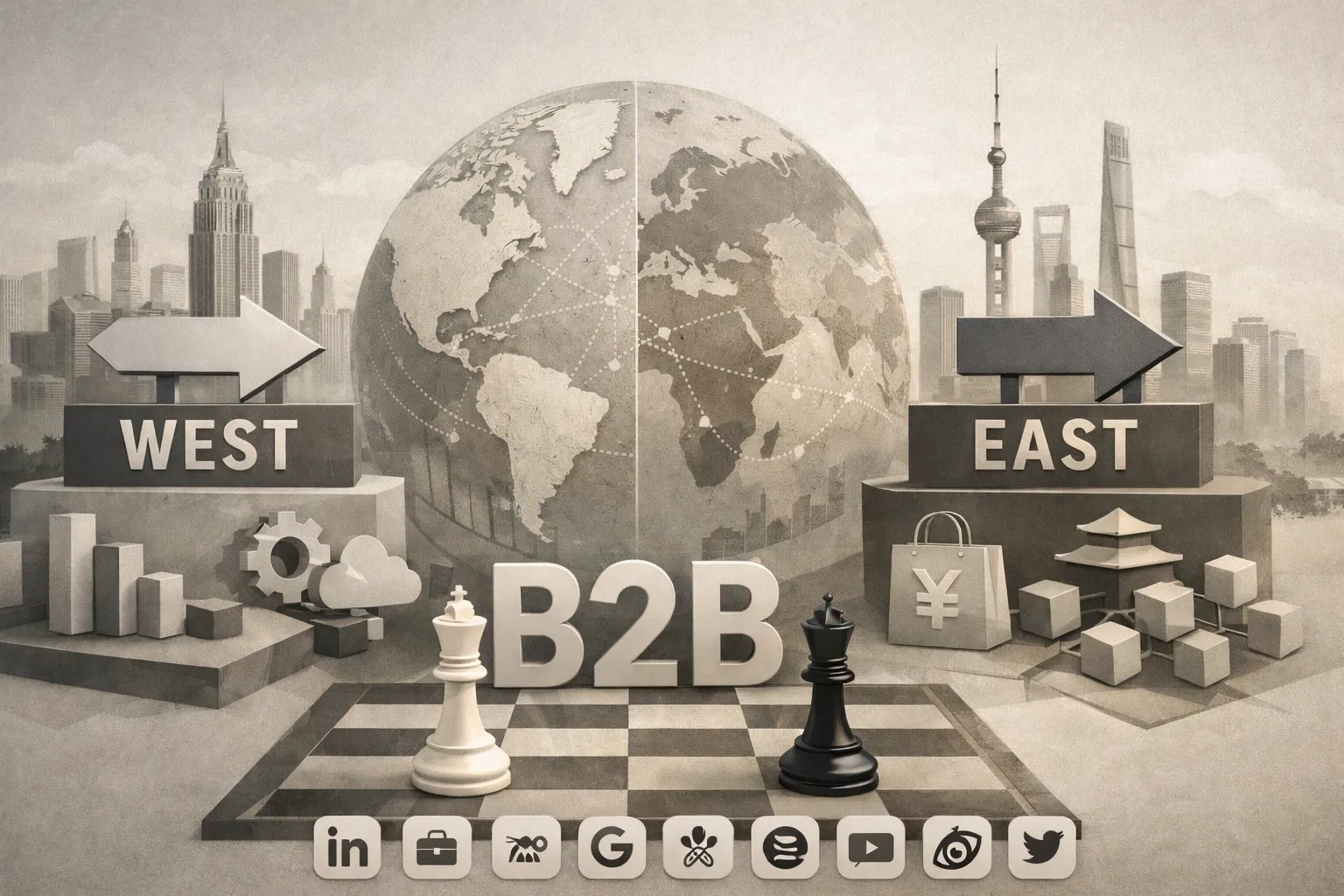
The real issue most teams face isn't a lack of tools, but a lack of structural alignment. If your website is not optimised for the way Western buyers consume information, no amount of ad spend on ChatGPT will fix the fundamental disconnect. This is where many Chinese firms struggle: they apply a China-first marketing logic to a Western digital landscape that operates on entirely different principles.
Reflecting on the Path Ahead
The launch of self-serve advertising on ChatGPT in April 2026 is a landmark event. It signals the professionalisation of the AI search space.
As a leader, your challenge is to look beyond the novelty of the platform. The goal is not just to "be on ChatGPT," but to ensure that your brand's expertise is properly translated, localised, and indexed in a way that resonates with a Western audience.
The companies that will win this decade are those that recognise that search is no longer a list of links: it is a conversation. If you aren't part of that conversation, you aren't in the market.
At Linkexis, we focus on bridging this gap, helping Chinese B2B companies navigate the complexities of Western platforms through our LINK Strategic Framework. Whether it’s through technical SEO or the emerging world of GEO, the objective remains the same: clarity, authority, and measurable growth.
The numbers from OpenAI are a strong signal. The question is whether your strategy is robust enough to respond to it.
Comments